
Highland County Older Court File Requests
A Highland County court file may still sit safely in storage. It just never shows up online. The county public-record policy describes a Records Center for material no longer needed day to day. Off-site files can take an estimated processing period, or arrive in rolling production. The Common Pleas portal publishes no historic-coverage dates. For an older case, gather the court and division. Add the case number or caption, the rough date, and the type of record. Then ask the clerk or court that owns the file. Ask whether inspection or a specific search request is possible. The Highland County Records Center repository listing helps you spot where records live. Even so, access and certification stay with the court or clerk controlling that particular file.
Highland County Court Record Requests
Common Pleas Civil, Criminal, and Domestic cases start at eAccess/Court View Public Records. There you can run a docket search. The Highland County Clerk of Courts states it plainly. The search shows no document images online. Want the paper behind an entry? Maybe a plain copy, a certified copy, or an older file? Call the Clerk legal office at 937-393-9957 or the court at 937-393-2422. You can also stop by 105 N. High Street in Hillsboro. The Clerk contact page lists phone, email, a web form, and the legal-office mailing address. Its general form works for inquiries, though, rather than documented certified-copy orders.
- Locate the case and identify the owning Highland County court or division.
- State whether the request is for a docket, named filing, ordinary copy, certified or authenticated product, recording, or transcript.
- Give the case number, date or docket event, and any deadline when contacting the clerk or court.
- Ask the custodian for the current fee, payment method, access limit, and turnaround before paying.
- Use a specific written request or counter inspection when a web result is incomplete, older, or needs certification.
Greenfield County Court takes phone, email, mail, and walk-in questions about its Madison Township records. Hillsboro Municipal Court is a separate Highland County custodian. Probate and Juvenile each run their own clerk desks and access rules. The county public-record policy can assist with county-office records that are reasonably identified. It never overrides a court restriction, however.
Highland County Record Products Differ
Four Highland County record products get mixed up constantly. A docket is simply the chronological index of a case. The filed document is the motion, pleading, order, judgment, or exhibit. The docket may point to that document. A certified or authenticated copy is an official product the custodian issues. A recording or transcript covers the proceeding itself. An online docket is great for finding the right event. But it is not a certified judgment. And a document title on a screen does not amount to the full file.
| Product | What it provides | Highland channel |
|---|---|---|
| Docket / record search | Chronological proceedings and settings | eAccess or the owning court’s separate Record Search |
| Filed document | Pleading, order, judgment, or exhibit | Owning clerk or court file, subject to access rules |
| Certified / authenticated copy | Officially certified product | Owning clerk or court, with custodian-specific fees |
| Recording / transcript | Digital proceeding copy or typed transcription | Common Pleas Court and, for a transcript, the process in Local Rule 1 |
Note: A Highland County docket shows what was entered. It does not authenticate the event or hand you every document it references.
Kinds of Court Records
Who keeps a Highland County file depends on its type and division. The Clerk holds Common Pleas General Division Civil and Criminal records, Domestic Relations records, and Highland-originated Fourth District appeals. Probate and Juvenile run separately at the courthouse. Hillsboro Municipal Court keeps its own municipal docket territory. Highland County Court in Greenfield handles Madison Township traffic, misdemeanor, eviction, small-claims, and limited-civil matters.
- Common Pleas docket entries, filings, orders, judgments, and certified products.
- Domestic Relations case materials, including controlled family-file records where applicable.
- Probate and Juvenile court records under their division-specific access rules.
- Hillsboro Municipal Court traffic, misdemeanor, and limited-civil records outside Madison Township.
- Greenfield County Court records for Madison Township lower-court cases.
The Highland County Records Center repository listing helps you identify county record repositories. Just because a file is missing online does not mean it is gone. County policy allows an estimate and rolling production for off-site work, so ask the right custodian about a search or inspection.
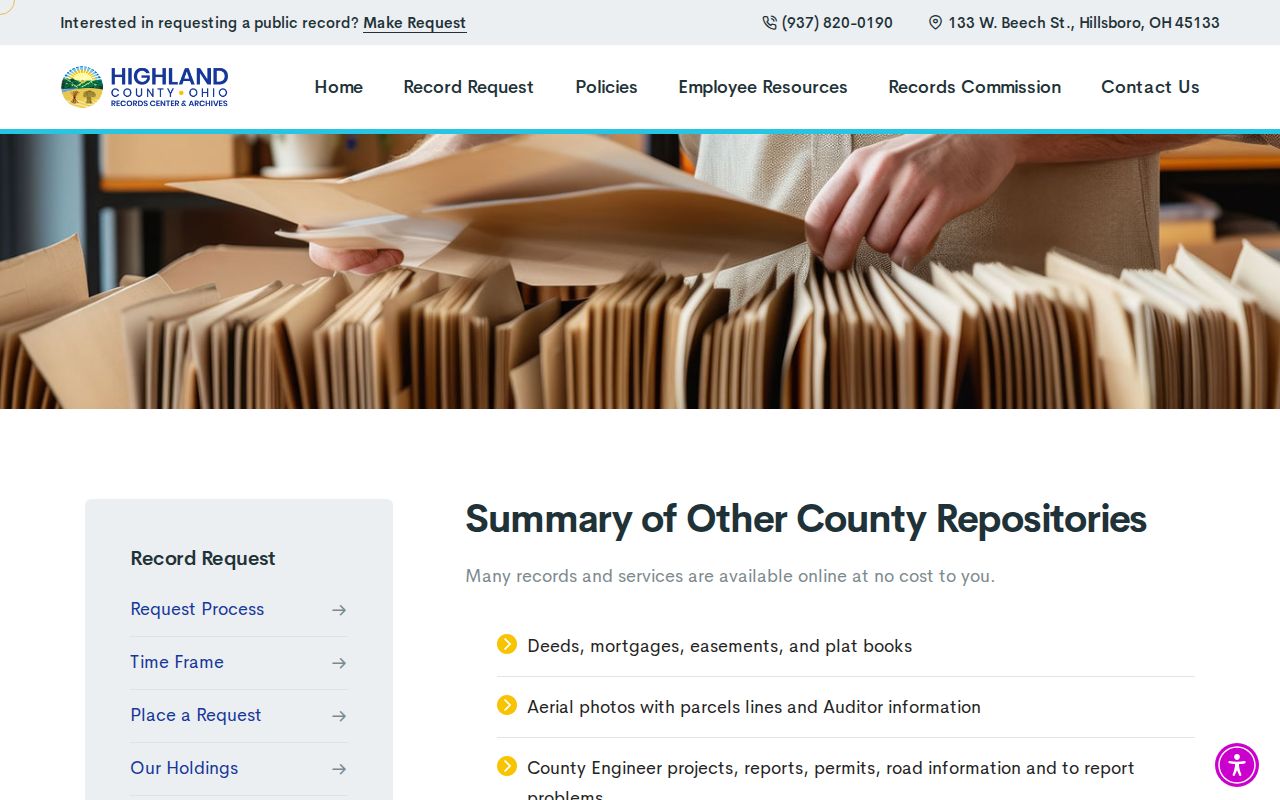
That repository material backs up a direct records inquiry whenever a Highland County file fails to surface through a current online docket.
Highland County Records Without Online Images
The Clerk is blunt about it. Common Pleas Record Search shows the docket for Civil, Criminal, and Domestic cases, but no document images are posted online. Seeing "entry," "motion," "notice," or "judgment" on screen does not mean a PDF waits behind it. Describe the document you want. Pin down the date or docket event, and ask the Highland County Clerk whether a public copy, redacted copy, or certified version exists. The Clerk's record role has statutory grounding in Ohio Revised Code 2303.12.
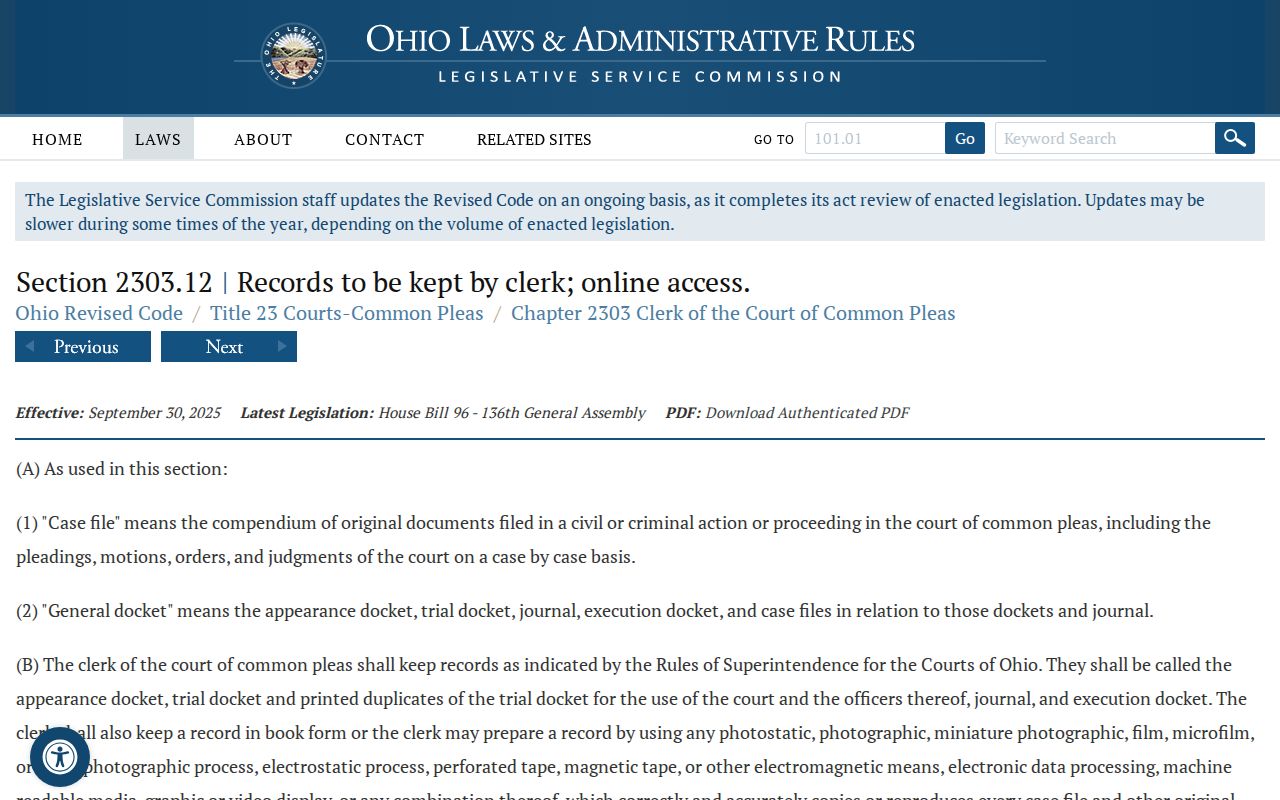
The statute gives clerk-record context; it does not turn the Highland County docket into a document-image archive.
Court Records: What They Contain
A Highland County case file often reaches far past the web docket. The docket gives you the dated sequence of events. The official file can hold pleadings, service returns, motions, notices, entries, judgments, and exhibits. Redaction or restriction can still apply. Common Pleas calendars add their own layer. They list date, time, judicial officer, case number, case style, setting type, participant roles, attorney fields, and sometimes event comments. Name the specific product you need rather than asking generally for "all records."
| Case number | The court-assigned identifier used to locate the right file. |
|---|---|
| Docket sheet | Chronological events, filings, orders, and settings. |
| Filed papers | Pleadings, motions, notices, entries, orders, or judgments when publicly accessible. |
| Setting details | Date, time, event label, and published calendar information where available. |
| Certification status | Whether the custodian can issue an official certified or authenticated product. |
Electronic court-record context also appears in Ohio Revised Code 2303.901.
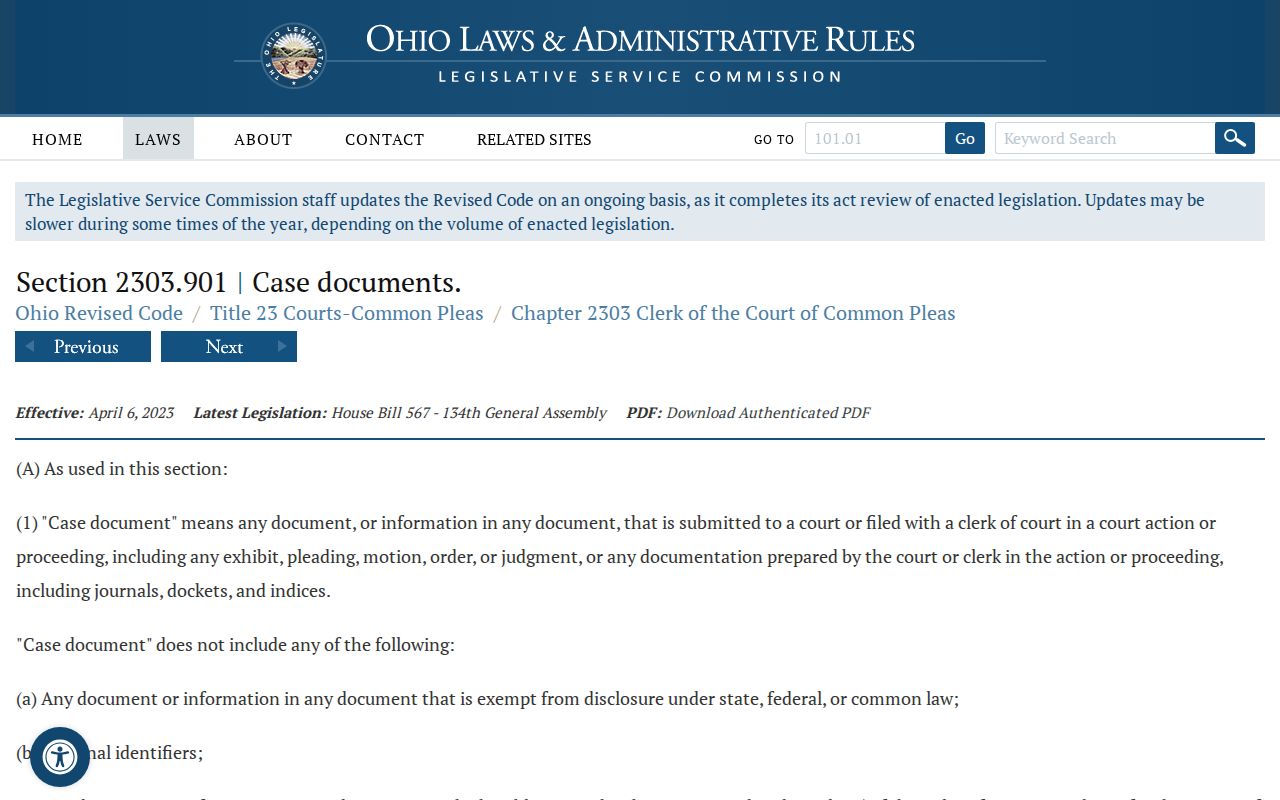
The Clerk still bars online access to document images in Highland County, whatever the state's electronic-record law says.
Highland County Hearing Record Requests
A recording is not a transcript. That distinction sits at the heart of Common Pleas Local Rule 1, which splits the two services for Highland County proceedings. The court records its hearings digitally. A digital copy of a proceeding costs $5. A typed transcript is something else entirely: you take the digital copy and then hire and pay a court reporter or transcriptionist yourself, just as the rule lays out. Knowing the difference keeps you from asking the Clerk for a "transcript" when all you really need is the court's recording.
Whichever product you want, bring the Highland County case number, the court, the date of the proceeding, and the type of request. Call ahead about the current process and costs before sending money. Remember that a recording is not a docket printout. Transcription prices are set by the reporter you hire, so no fixed rate applies.
Copy Fees and Certification
Copy fees depend on which office holds the file. The legal-fee schedule hosted by the Highland County Clerk prices a certified copy at $1. A certificate of official character also runs $1. An authenticated copy costs $2, a digital recording $5, and a filing certificate $30. The schedule leaves two gaps, though. It gives no unit for the Common Pleas certified-copy entry and posts no general ordinary-copy charge, so confirm amounts before you order. A Probate or Greenfield rate never applies to a Common Pleas request.
| Custodian and item | Official amount located | Limit |
|---|---|---|
| Common Pleas certified copy | $1 | Unit is not stated; confirm current process. |
| Common Pleas authenticated copy | $2 | Confirm the applicable product. |
| Common Pleas digital proceeding copy | $5 | Transcript cost is separate. |
| Probate authenticated copy, filed | $50 + $1 per page | Probate-specific fee. |
| Greenfield certified copy of judgment | $5 per page | County Court-specific, verify current rate. |
| Greenfield ordinary copy | $0.10 per copy or $1 per report | Local Rule 26; verify current rate. |
Highland County Clerk of Courts
105 N. High St., P.O. Box 821
Hillsboro, OH 45133
937-393-9957
Monday–Friday, 8:30 a.m.–4:00 p.m.
Highland County and Federal Court Records
Federal cases never live in the Highland County Clerk's records. The U.S. District Court for the Southern District of Ohio is its own trial court, and the U.S. Bankruptcy Court is a separate federal custodian as well. No Common Pleas search, copy order, or certification can pull a federal file. Go to the court system that actually owns the case record.
The Southern District of Ohio is the separate federal route for those records.
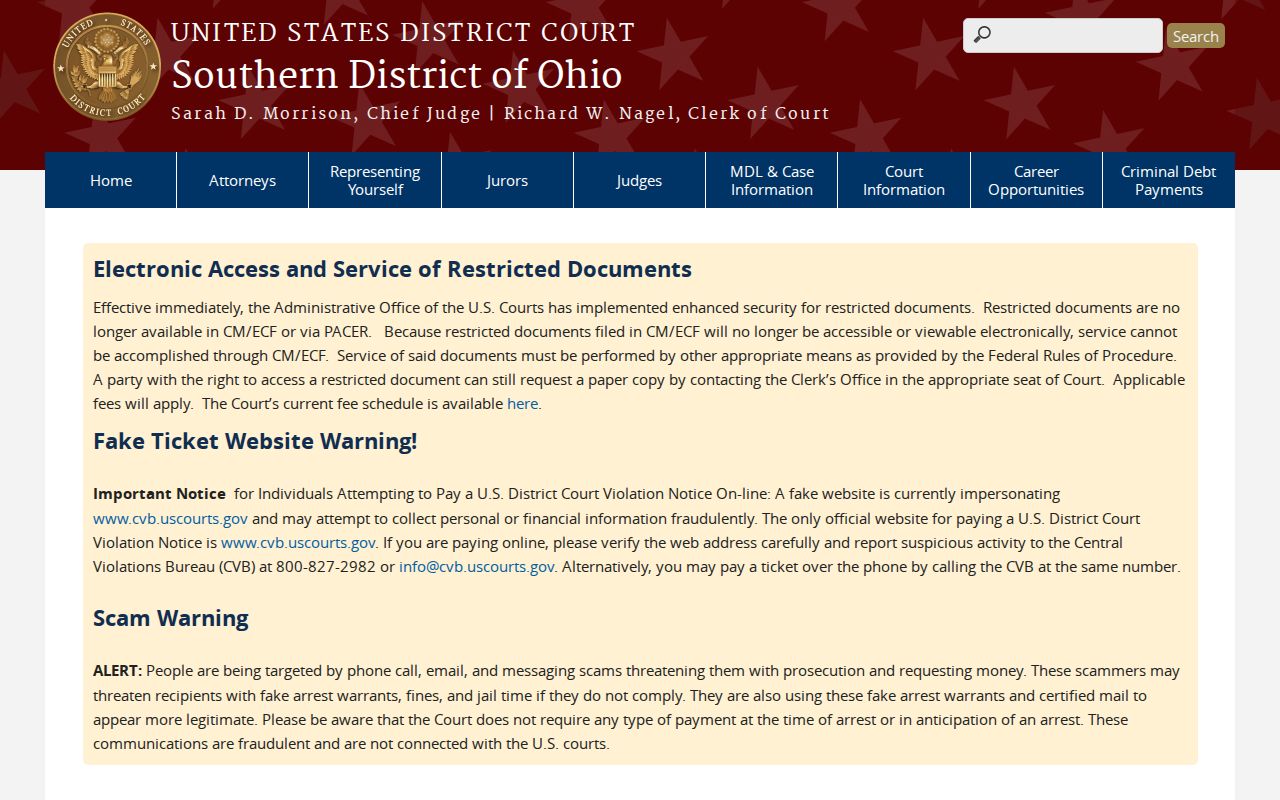
The federal layer sits apart from Highland County Common Pleas, Municipal, County Court, Probate, and Juvenile records. The U.S. Bankruptcy Court for the Southern District of Ohio keeps its own files as a distinct custodian.
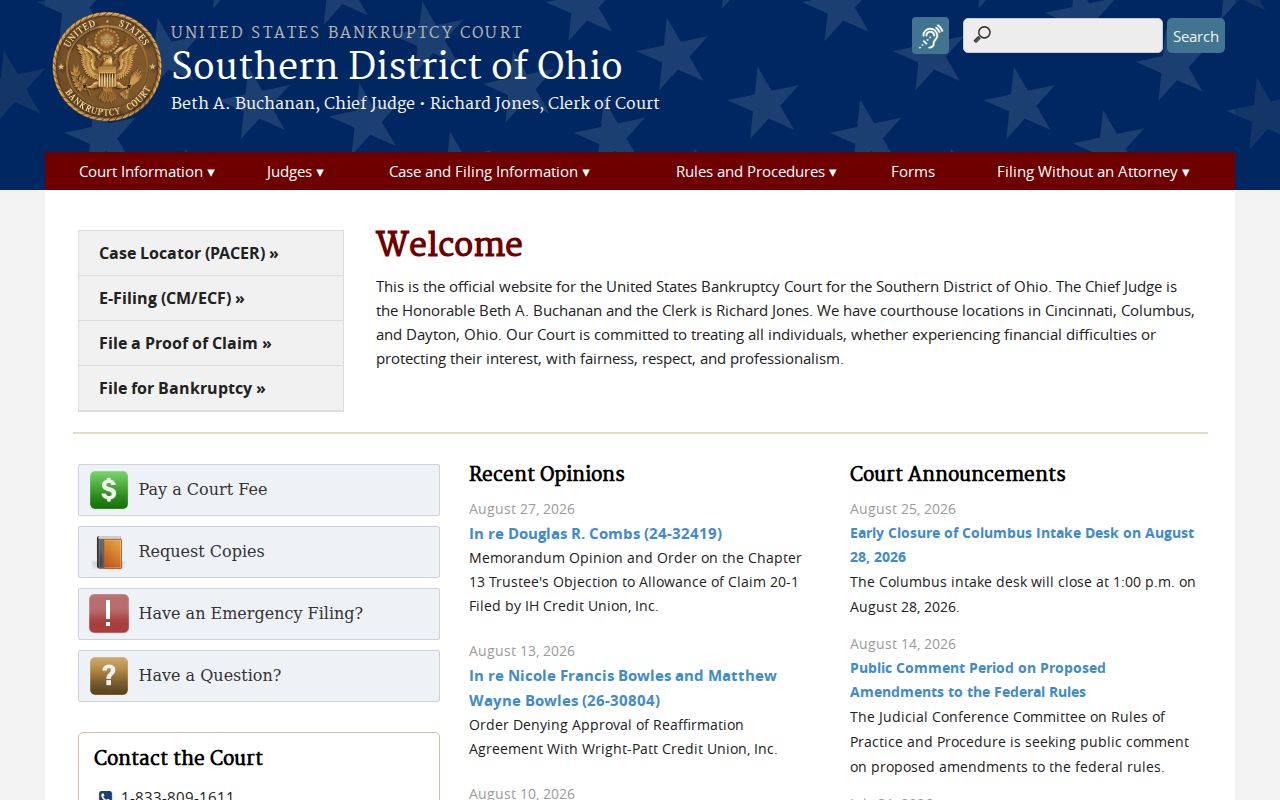
A bankruptcy record request follows federal channels rather than any Highland County clerk office.
Access Rules for Court Records
Ohio Rules of Superintendence 44 through 47 control public access to court records. Highland Common Pleas Local Rule 35 presumes documents are open unless a rule or law says otherwise. The rule shields health, treatment, guardian-ad-litem, financial, and appraisal material, among other protected categories. Domestic Relations adds its own wrinkle. Family-file documents may be held separately. The public file shows only a Notice of Filing. Juvenile records carry a separate confidentiality framework of their own.
Governing access: Sup.R. 44–47 is the court-record framework; Ohio Revised Code 149.43 governs public-office records without overriding court restrictions; and Ohio Revised Code 2953.32 covers criminal sealing and expungement.
Keep any Highland County request narrow and send it to the custodian who holds the record. County policy says reasonably identifying information helps processing. Even so, a request cannot force the release of a sealed or confidential court record.